


Get monthly updates and savvy success stories. Straight to your inbox.
You’ve put money aside for tax. You’ve allowed for a bill of around £2,000. Then you finish your Self Assessment and discover £3,000 is due in January.
How did that happen?
For some people, the January payment includes both the balance for the completed tax year and an advance towards the next one. That advance is called a payment on account.
It can be an unwelcome surprise, particularly the first time it applies. Finding out before January gives you time to understand the figures and work out how you will pay.
In this article, we explain why your January payment could be higher than expected, how to check what you owe and what you can do if you haven’t set enough aside.
Why can January’s payment include next year’s tax?
With employment income, tax is usually deducted from your pay throughout the year. When you have income taxed through Self Assessment, HMRC may collect advance payments towards your next bill.
These are called payments on account. Where they apply, you usually make two instalments: one on 31 January and another on 31 July. Each is generally half the previous year’s relevant bill.
You normally do not need to make them if that bill was below £1,000, or more than 80% of your tax was collected outside Self Assessment, such as through your wages. HMRC explains the rules here.
This does not mean everyone’s January payment will be higher than expected. But it is worth checking before assuming that the amount you have saved will cover it.
How a £2,000 bill could mean paying £3,000 in January
Imagine you are making payments on account for the first time.
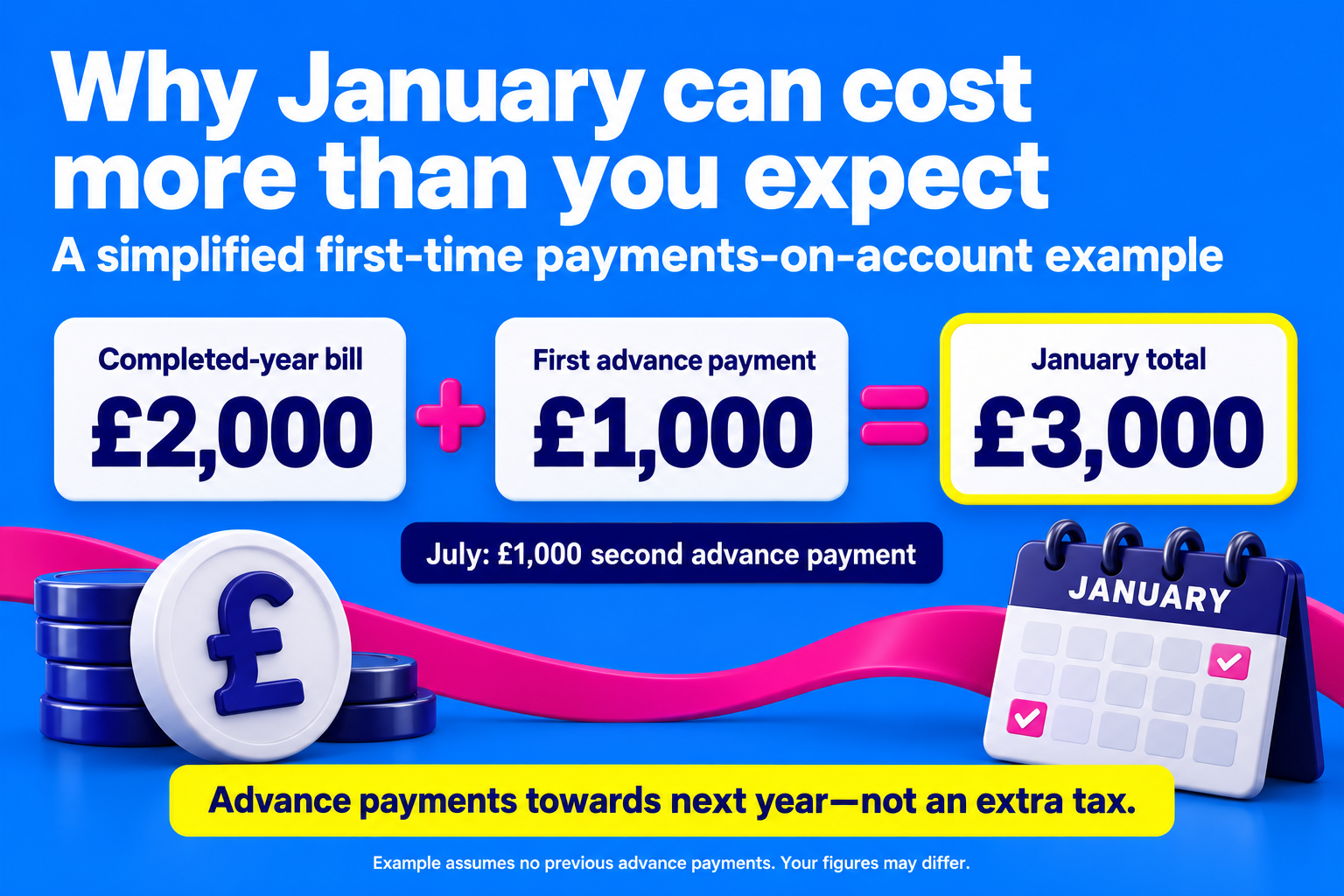
Your bill for the completed tax year is £2,000. For this example, assume the whole amount counts towards the payments-on-account calculation and you have made no advance payments already.
You would need to pay:
- £2,000 by 31 January to settle the completed tax year.
- £1,000 by the same January deadline as the first advance towards the following year.
- £1,000 by 31 July as the second advance.
That makes the January payment £3,000.
The additional £1,000 is credited towards the next year’s bill. It is not a fee or a second charge on the same income.
Your own calculation may look different. For example, payments already made towards the completed year can reduce the outstanding balance. The important distinction is between the tax calculated for a year and the total payment due on a particular date.
Does filing early mean paying early?
Submitting your return early does not normally bring the payment deadline forward.
For most online returns covering 6 April 2025 to 5 April 2026, the filing deadline is 31 January 2027. Outstanding tax for that year is also usually payable by that date. Check HMRC’s deadlines for your circumstances.
You can therefore get the return prepared before January, understand what you owe and still pay by the applicable deadline.
That is a useful reason to start now. You have time to compare the actual amount with your savings, find missing records and ask questions about anything unexpected.
What should you check when your calculation is ready?
Before approving your return or arranging payment, make sure you can answer these four questions:
- What is the bill for the completed year? This is the liability arising from that year’s return.
- What have I already paid towards it? Earlier payments may reduce the amount outstanding.
- What is the total due in January? Check whether it includes an advance towards the next year.
- Is another payment due in July? Put that amount and date into your budget too.
If someone prepares your return, ask them to explain how these figures fit together. You should be able to understand what you are paying without needing an accounting degree.
What if your income has fallen?
An advance based on a stronger previous year may be too high if your income has since dropped.
You may be able to apply to reduce your payments on account if you expect a lower bill. However, reducing them too far can lead to interest on the shortfall.
Check your expected position before requesting a reduction. A quieter month alone may not tell you how the whole tax year will turn out. HMRC’s payments-on-account guidance explains the process and consequences.
What if you have not saved enough?
Finding a shortfall is stressful, but knowing about it gives you a starting point.
Work out the amount missing and how much you can realistically set aside before the deadline. If you expect to have difficulty paying, contact HMRC rather than leaving it unresolved.
You may be eligible for a payment arrangement, known as Time to Pay. Approval depends on your circumstances and affordability; it is not automatic. HMRC explains what to do if you cannot pay in full.
You do not have to work out the return alone
Perhaps the reason you have not started is that you do not know which figures to use.
You might have employment income alongside freelance work, rental income to account for, or expenses you are unsure about. Those questions can make a return feel like a much bigger job.
Getting help means you can hand over the preparation while still reviewing the result before it is submitted.
To get started, gather:
- Details of your income sources for the tax year.
- Supporting records, such as employment documents, business records or rental statements.
- Expense information and any questions about it.
- Your previous return and details of earlier tax payments, if available.
How Addition helps you get your return sorted
You answer questions about your circumstances and securely upload your documents. Our finance team reviews your information, considers eligible expenses and allowances, and prepares your return.
You can see your completed return and tax position before approving it. Once approved, we submit it to HMRC. You can also track progress and contact the team during preparation.
It is a one-off service. If your circumstances require additional work, we discuss that with you before proceeding.
Find out what you owe while you have time to plan
If your return is still waiting, getting it prepared now can answer the question that matters most: how much do you need to pay, and when?
That information helps you make decisions about the money in your account and what to set aside over the coming months.
Get your Self Assessment started with Addition.
Have a question about your circumstances? Contact our team or book a call to discuss the support you need.

