


Get monthly updates and savvy success stories. Straight to your inbox.
If you are self-employed, earn rental income, or run a side business, the way you report income to HM Revenue and Customs is changing.
From April 2026, Making Tax Digital for Income Tax Self Assessment (often shortened to MTD for ITSA) begins rolling out for many taxpayers. Instead of submitting one annual self-assessment tax return in the traditional way, eligible individuals will need to keep digital records and send updates throughout the year.
For many people, this sounds like more admin. However, it can also create better visibility over profits, expenses, and expected tax bills.
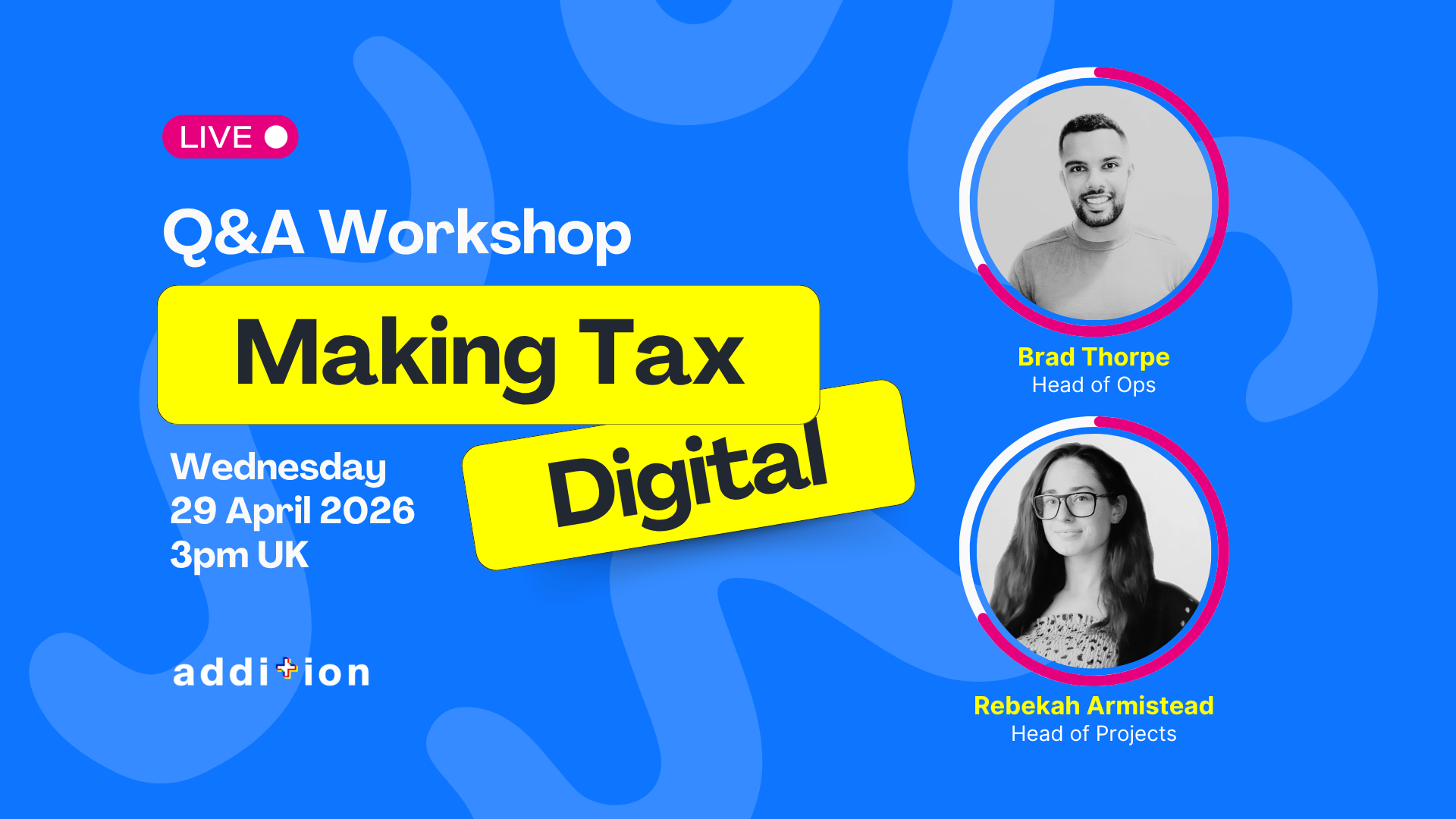
In this workshop, we explain who it applies to, when it starts, how often you need to file, and what it means for your business.
What Is Making Tax Digital?
Making Tax Digital is a government programme designed to move tax reporting online and make record-keeping more accurate.
There are different strands of the programme, including:
- Making Tax Digital for VAT
- Making Tax Digital for Corporation Tax (future developments)
- Making Tax Digital for Income Tax Self Assessment (MTD for ITSA)
The focus here is MTD for Income Tax, which affects self-employed people and landlords.
Instead of waiting until the end of the tax year to declare income, qualifying individuals will need to submit updates during the year using compatible software.
Why Is This Being Introduced?
Historically, many self-employed people only reviewed their figures once a year when it was time to complete a tax return.
That often led to issues such as:
- Missing receipts
- Poor record keeping
- Unexpected tax bills
- Late submissions
- Cash flow pressure
- Errors in returns
More regular reporting is intended to reduce these problems.
For business owners, it may also bring genuine advantages. When your records stay up to date, you can usually make better decisions about spending, pricing, growth, and tax planning.
When Does Making Tax Digital Start?
The rollout begins in stages.
From April 2026
If your qualifying income is over £50,000, you will need to comply.
From April 2027
The threshold reduces to over £30,000.
Does Making Tax Digital Apply to Me?
It depends on your income and where that income comes from.
Making Tax Digital for Income Tax is aimed at:
- Sole traders
- Freelancers
- Contractors
- Landlords
- People with self-employed side income
The key test is your gross income, not profit.
That means the threshold is based on your income before expenses are deducted.
Example
If you earn:
- £20,000 from freelance work
- £30,000 from rental property
Your combined qualifying income is £50,000.
That means you may fall within the rules once the relevant threshold applies.
Is It Based on Revenue or Profit?
This is one of the most common questions.
The threshold is based on turnover / revenue, not profit.
So even if your expenses are high and your profit is relatively low, the income threshold is still measured before expenses.
That makes accurate bookkeeping especially important.
What If I Have a Job and a Side Hustle?
Many people now earn income from more than one source.
If you have a normal salaried job through PAYE, that employment income does not count towards the MTD threshold.
However, your self-employed or rental income does count.
Example
You earn:
- £35,000 through PAYE employment
- £18,000 from freelance design work
Only the £18,000 freelance income is relevant for Making Tax Digital.
If your side income remains below the threshold, you may not need to join yet.
How Often Will I Need to File?
Under the new system, you will usually need to submit:
Quarterly Updates
You send income and expense summaries during the year.
Final Declaration
At the end of the tax year, you complete a final submission that confirms your overall tax position and includes adjustments such as:
- Allowances
- Pension contributions
- Reliefs
- Other taxable income
- Dividends (where relevant)
So while annual reporting still exists in a final form, much of the work happens across the year instead of all at once in January.
Do I Need to Pay Tax Every Quarter?
No. This is another area where many people are confused.
Quarterly reporting does not automatically mean quarterly tax payments.
Tax payment dates generally remain aligned with the existing self-assessment system unless future rules change.
That means many taxpayers will still pay in January, with payments on account where applicable.
However, quarterly updates should give you a much clearer estimate of what you are likely to owe.
That can make budgeting far easier.
Can I Still Use Spreadsheets?
Many sole traders currently manage records using:
- Excel
- Google Sheets
- Paper receipts
- Notes apps
- Shoebox bookkeeping
While spreadsheets may still play a role in some setups, the key requirement is that submissions must be made digitally through compatible software.
In practice, many people will find it easier to move to cloud accounting tools, like Addition, that allow:
- Bank feeds
- Receipt capture
- Expense categorisation
- Real-time profit reporting
- Digital submissions
Manual systems often become harder to manage once quarterly filing starts.
What Does a Good Accounting Setup Look Like?
If you want the transition to be smooth, aim for a simple digital process.
Ideal Setup for a Sole Trader or Landlord
1. Separate Business Bank Account
Keep personal and business transactions separate.
2. Receipt Capture App
Photograph receipts as you spend.
The Addition Go App does just this and is available on Apple and Android devices.
3. Accounting Software
Use modern accounting software that tracks income, expenses, and tax estimates.
4. Monthly Review Habit
Check figures monthly rather than yearly.
5. Professional Support
If you are unsure about tax rules, a UK-based accountant who specialises in MTD, can save time and reduce mistakes.
Why This Could Actually Help Your Business
Although many people see Making Tax Digital as another compliance task, it may improve how you run your business.
Benefits can include:
- Better awareness of profits
- Fewer surprises at tax time
- Improved cash flow planning
- Cleaner records
- Faster access to finance
- Less stress in January
- Better business decisions year-round
For people who have always “done the books later”, this change may be the push needed to stay organised.
What Should You Do Now?
If you think the rules may apply to you, now is the right time to prepare.
Practical Next Steps
- Check your annual gross self-employed and rental income
- Review how you currently keep records
- Move away from paper receipts
- Consider digital bookkeeping software
- Speak with an accountant if unsure
- Build a routine before quarterly filing begins
Starting early is usually much easier than scrambling close to a deadline.
If you are unsure whether the new rules apply to you, need help choosing the right bookkeeping setup, or want expert guidance tailored to your business, speaking to a professional can save time and stress.
Book a call today to discuss your situation and get clear next steps with an expert adviser.
Final Thoughts
Making Tax Digital is changing how self-employed people and landlords report income in the UK.
While it introduces more regular reporting, it can also create better financial visibility and fewer year-end surprises. For many businesses, the biggest win will be staying organised and knowing where they stand throughout the year.
If you prepare now, the transition in 2026 should feel far more manageable.

