


Get monthly updates and savvy success stories. Straight to your inbox.
Self Assessment accountant costs vary according to your income sources, the complexity of your tax affairs and the condition of your records.
Straightforward returns can cost around £150 - £400 plus VAT at a typical accountancy firm, although lower-priced online services are available. Complex returns can cost more. Always compare what each quote includes rather than judging the headline price alone.
At Addition, our Self Assessment service starts from £119, with our expert finance team preparing your return and submitting it to HMRC after you approve it. More complicated circumstances may require additional support, which we discuss with you before proceeding.
So, what makes one return more expensive than another, and what should you expect for your money?
What affects the cost of a Self Assessment accountant?
The work behind a tax return matters more than most people think. An accountant needs to understand your circumstances, check the information supplied and work out how the relevant rules apply.
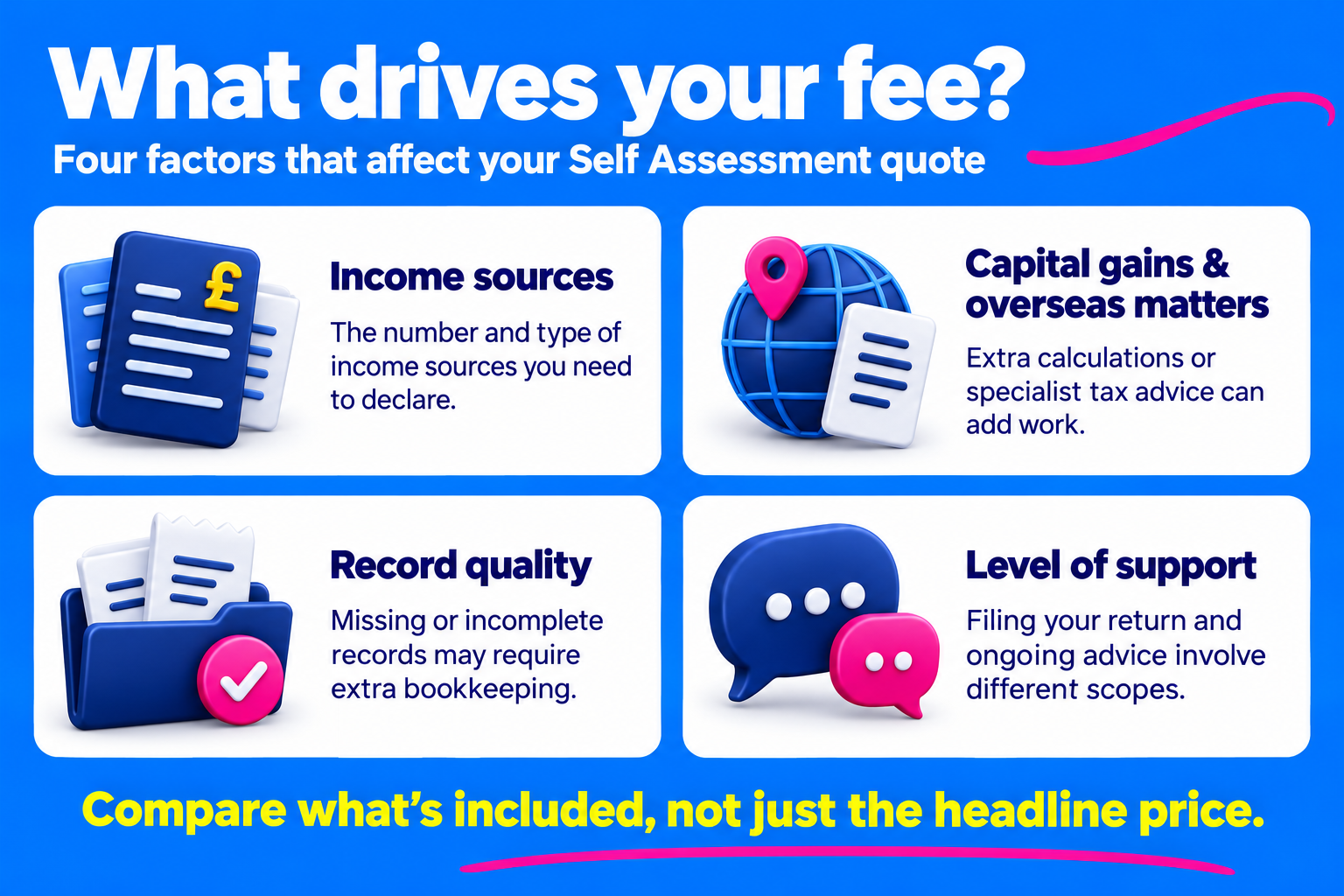
Before submitting a return a professional accountant will consider:
The number and type of income sources
A return covering employment income and a small amount of additional income will usually involve less work than one covering several businesses, rental properties and overseas earnings.
Capital gains and overseas tax matters
Selling investments or property can introduce calculations beyond reporting income. Overseas earnings may also raise questions about residence, foreign tax paid and relief from double taxation. These situations can require specialist tax advice.
The quality of your records
Clear records make it easier to prepare an accurate return. Missing invoices, unexplained bank transactions and incomplete expense totals create extra work.
For example, supplying an organised income and expense summary is different from asking an accountant to reconstruct a year’s trading from bank statements. The second task may require bookkeeping as well as tax return preparation.
The level of support you need
A one-off filing service and year-round accounting support serve different purposes.
What should a Self Assessment accountant’s fee include?
A useful quote should explain the work included, your responsibilities and any circumstances that could increase the price.
Use this checklist when comparing providers:

What does Addition’s Self Assessment service include?
Addition combines an online process with professional accounting support.
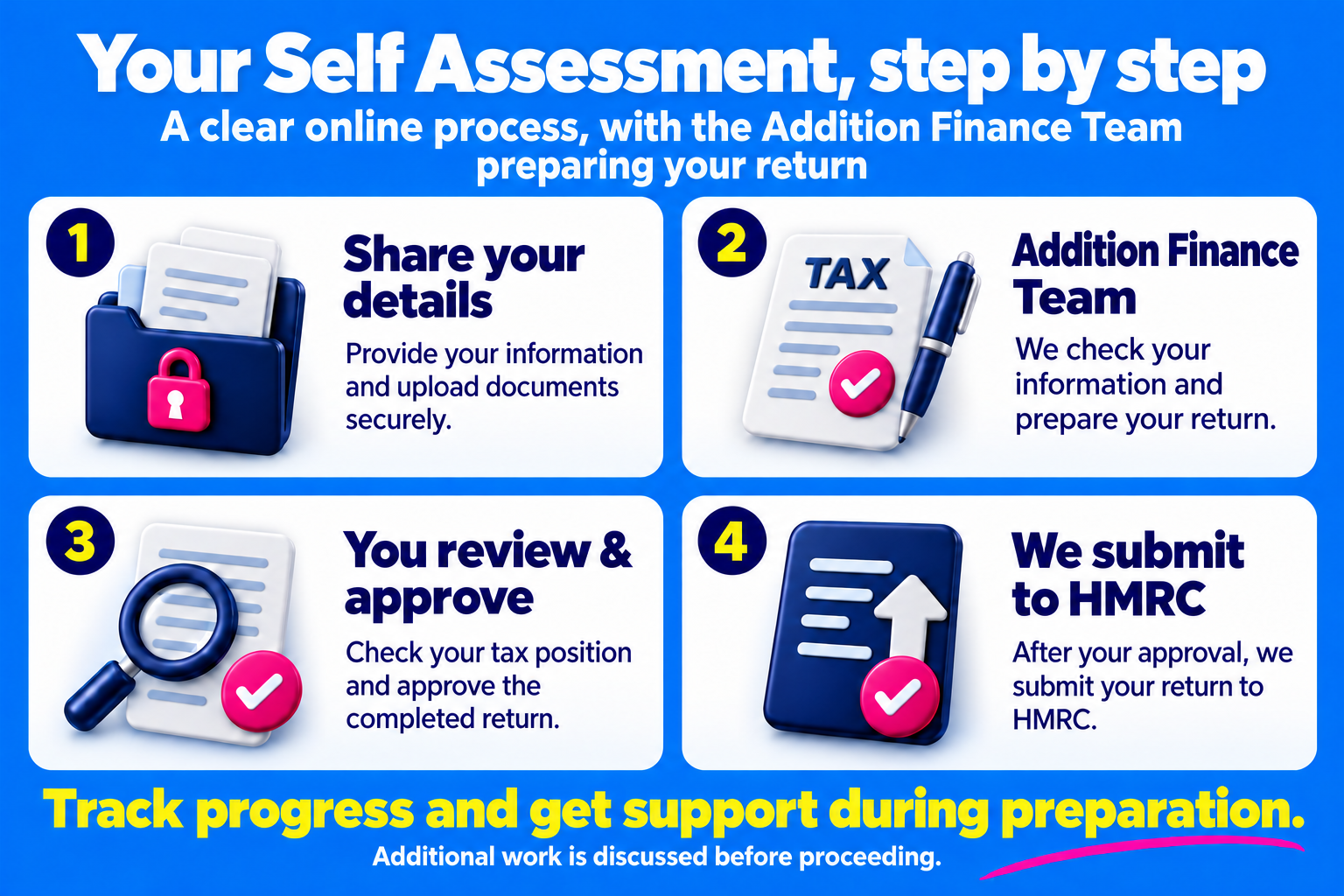
You provide your details and upload documents securely. An accountant reviews the information and prepares your return, including consideration of eligible expenses and allowances. You then review your tax position and approve the completed return before we submit it to HMRC.
The service also provides progress tracking and support during preparation. Pricing starts from £119 as a one-off payment, with additional work discussed before proceeding.
Explore Addition’s Self Assessment service to see how it works.
Frequently asked questions
Is paying an accountant worth it?
That depends on your confidence, available time and tax circumstances.
You may feel comfortable completing a straightforward return yourself. Professional help becomes more valuable when you are unsure what to declare, have several income sources or need help understanding expenses and reliefs.
An accountant can reduce the time you spend interpreting requirements and organising the return. However, no responsible provider should promise that hiring them will automatically reduce your tax bill.
You also remain responsible for your own tax affairs, even when using an agent. Review the completed return carefully and query anything you do not understand. HMRC makes this responsibility clear in its guidance on choosing a tax agent.
How can you keep your Self Assessment costs manageable?
Start with complete, organised information.
Gather your income records, relevant expense details, previous return and documents such as employment statements or dividend vouchers. Explain any changes in your circumstances rather than assuming your accountant already knows about them.
Before accepting a quote, ask:
- Does this cover every income source I have described?
- Is the total inclusive of any applicable VAT?
- Will you explain my tax calculation?
- What could trigger an additional charge?
- What information do you need, and by when?
Starting early also leaves more time to resolve missing information. For most online 2025/26 returns, the filing deadline is 31 January 2027, which is also the usual deadline for paying the tax owed. Check HMRC’s current deadlines for your circumstances.
Can an accountant submit my Self Assessment for me?
Yes. An appropriately authorised accountant or tax agent can submit your return on your behalf. They should explain the authorisation process and give you an opportunity to check the figures.
Are bookkeeping and tax return preparation the same service?
No. Bookkeeping organises financial transactions; tax return preparation uses the relevant records to complete your return.
Get clarity on your Self Assessment
Choosing an accountant is easier when you understand the price, the process and the support included.
Start your Self Assessment with Addition, or contact our team to discuss your unique circumstances.

